
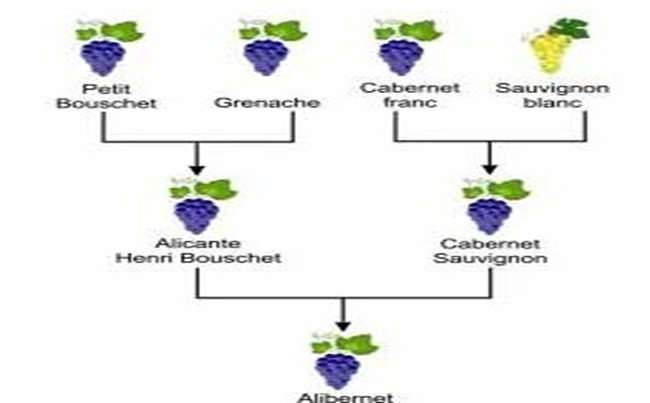
The technical grape variety Odesa Black (also known as Alicante Bouschet × Cabernet Sauvignon hybrid – Alibernet) was bred in 1948 by a team of breeders at the National Scientific Center “V. E. Tairov Institute of Viticulture and Winemaking” by crossing the French varieties Alicante Bouschet and Cabernet Sauvignon. The name Alibernet originates from the combination of these two parent varieties. Since 1972, Odesa Black has been included in the State Register of Plant Varieties Suitable for Cultivation in Ukraine.
Wines produced from the Odesa Black variety are considered a hallmark of Ukrainian winemaking.
According to the Ministry of Agrarian Policy, the technical grape variety Odesa Black (Alibernet) is cultivated in vineyards in the following regions:
- Odesa region – 1276.5 thousand ha
- Kherson region – 57.64 thousand ha
- Mykolaiv region – 143.03 ha
- Zakarpattia region – 10.67 ha
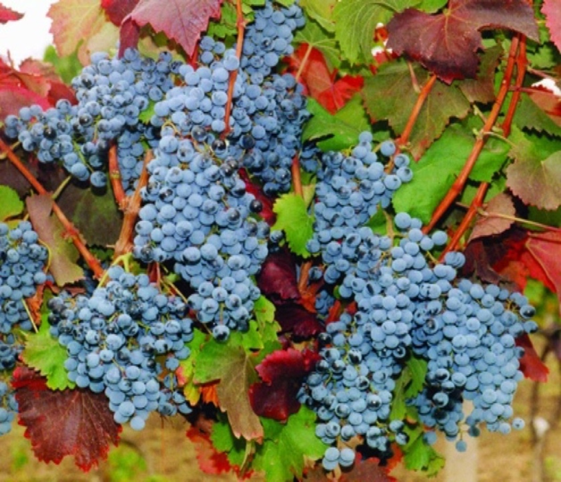
Clusters of Odesa Black grapes
Previously, the Odesa Black grape variety was mainly used in blends as a coloring wine material. However, recent years have demonstrated that this grape has significant potential as an authentic Ukrainian varietal wine. Increasingly, producers are using it to create dry single-varietal wines.
In 2021, a program to promote wines made from Odesa Black as a national wine symbol of Ukraine was launched. National wine competitions were held, and on April 22, 2021, the “Best Riedel glass for Odessa Black variety” (Odessa Wine Week).
In collaboration with the well-known Ukrainian photographer Arsen Fedosenko and the winery “Frumushika Nova,” the project “One Year in the Life of Odesa Black” was launched in 2023.
Genetic origin
- Parent varieties:
- Alicante Bouschet — provides intense colour
- Cabernet Sauvignon — contributes aromatic complexity and agronomic traits
- Type: technical red grape, teinturier type
→ contains pigment not only in the skin but also in the pulp (high anthocyanin content).
Agronomic characteristics
Main parameters
- Vegetation period: 160–165 days
- Yield: high and stable (120–130 q/ha)
- Sugar content: 18–23%
- Acidity: 5.8–9.7 g/L
Morphology and growth
- Vine: medium to strong vigor
- Cluster: medium-sized, conical, loose
- Berries: medium, black, thick-skinned
- Wood maturation: good (80–90%)
Resistance
- Moderate resistance to fungal diseases (mildew, oidium)
- Relatively resistant to grey rot
- Frost resistance: up to about–22°C
Climate adaptability
- Best suited to southern Ukraine (Odesa, Mykolaiv regions)
- Well adapted to:
- warm, dry climates
- long sunshine duration
- Shows ability to:
- tolerate drought
- withstand frost
Also cultivated in parts of Central and Eastern Europe (e.g., Czech Republic, Slovakia). [uk.wikipedia.org]
Potential under climate change
- Demonstrates:
- tolerance to water deficit and temperature stress [agronews.ua]
- ability to maintain wine quality under stress conditions [agronews.ua]
In broader viticulture context:
- varieties with strong genetic resilience are critical for adapting to climate change impacts [mdpi.com]
Conclusion:
Odesa Black is considered a promising variety under future conditions of:
- rising temperatures
- increased drought frequency
- climatic instability
Sensory profile of wines
Appearance
- Deep colour:
dark ruby to almost inky [Одеський Ч…норобства!]
Aroma
- Dark fruits:
- blackberry
- blackcurrant
- cherry
- Spices:
- black pepper
- clove
- liquorice
- Additional notes:
- cocoa, chocolate, coffee
- smoky or oak tones (with aging) [Одеський Ч…норобства!], [Еволюція О…я став …]
Taste
- Full-bodied, structured
- Pronounced yet velvety tannins
- Balanced:
- fruitiness + acidity + tannin [Одеський Ч…норобства!]
Often described as:
powerful, rich, character-driven red wine with strong aging potential
International recognition
- Wines from Odesa Black:
- win gold and silver medals at international competitions (France, Germany, Spain) [agronews.ua]
- Presented at:
- international exhibitions such as ProWein and London Wine Fair [the-buyer.net]
- Recognized as:
- a flagship red variety of Ukraine [nv.ua]
👉 Today it is:
- a representative of Ukrainian terroir
- increasingly promoted on global markets
Odesa Black is:
- a Ukrainian-bred grape variety
- genetically combines colour intensity with aromatic complexity
- highly adaptable to environmental and climate stress
- capable of producing deep, structured, age-worthy wines
- gaining growing international recognition